What 7 Factors Determine the Right Neighborhood in Koh Samui?
The 7 factors that determine neighborhood suitability in Koh Samui are: (1) proximity to beaches and coastline, (2) infrastructure quality including road access and utilities, (3) safety and security profile, (4) investment potential and rental yields, (5) community amenities and services, (6) noise levels and environmental factors, and (7) future development plans. Each factor carries different weight depending on whether the purchase is for personal residence, vacation home, or investment purposes.
Proximity to Beaches and Coastline
Beach proximity determines 40-60% of property value in Koh Samui’s coastal real estate market. Properties within 500 meters of Chaweng Beach, Lamai Beach, or Bophut Beach command premiums of 30-50% over inland alternatives [^2^].
The 4 primary beach zones in Koh Samui offer distinct characteristics:
- Chaweng Beach: 7-kilometer stretch of white sand with highest tourist density, nightlife, and commercial activity. Property prices range 120,000-250,000 THB per sqm.
- Lamai Beach: 4-kilometer beach with family-oriented atmosphere and mid-range pricing at 85,000-160,000 THB per sqm.
- Bophut Beach: 3-kilometer Fisherman’s Village area combining traditional Thai-Chinese architecture with upscale dining. Prices range 100,000-200,000 THB per sqm.
- Maenam Beach: 5-kilometer quieter beach with local Thai community presence. Prices range 70,000-140,000 THB per sqm.
Beachfront properties in Koh Samui generate 8-12% gross rental yields during high season (November-April), declining to 4-6% during low season [^3^]. Properties located 1-2 kilometers inland trade beach access for 40-60% lower purchase prices while maintaining reasonable rental demand.
Infrastructure Quality
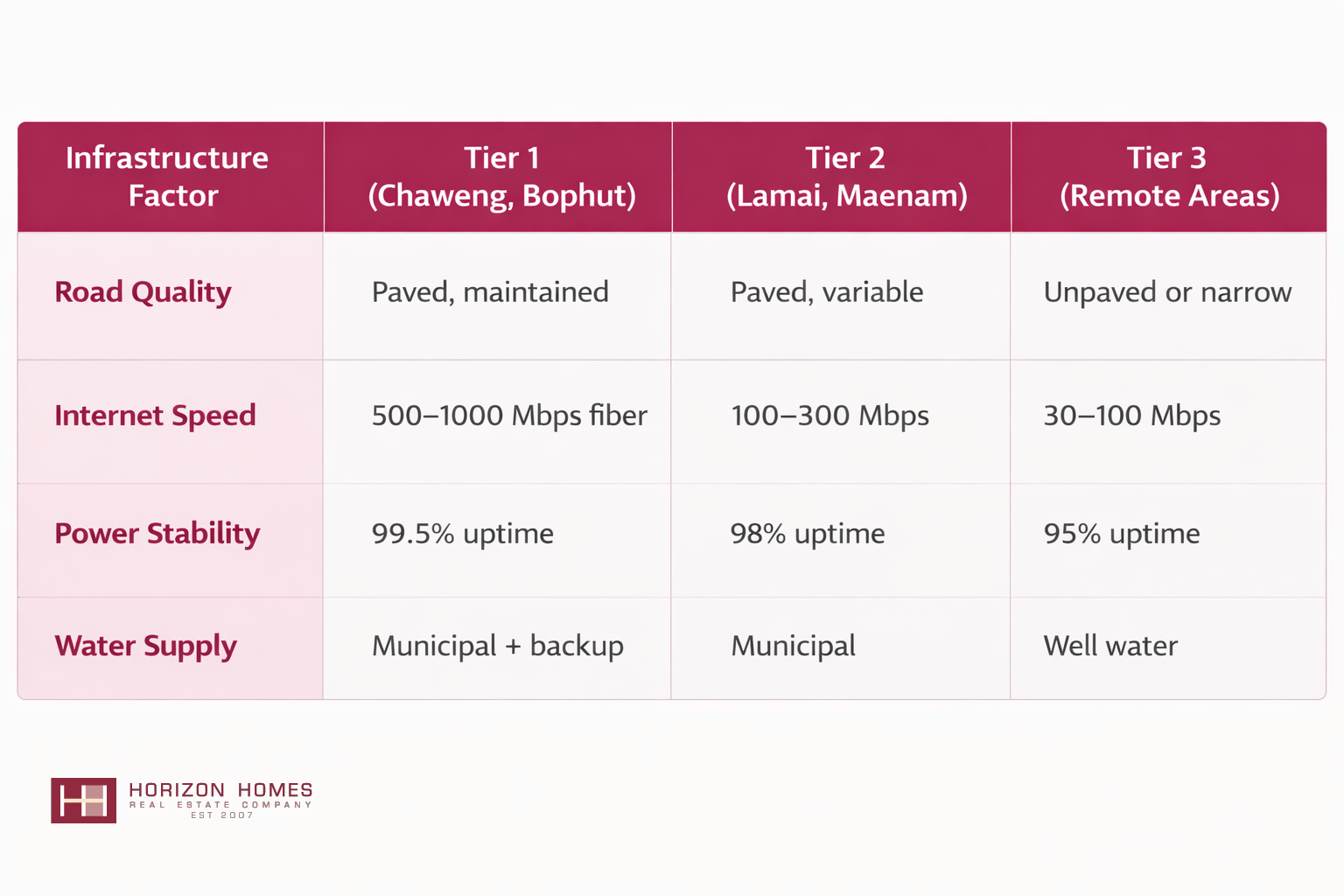
Infrastructure quality in Koh Samui varies significantly by area, with established tourist zones receiving priority for road maintenance, electrical grid upgrades, and fiber internet installation. The island’s ring road (Route 4169) provides primary connectivity, with secondary roads varying from paved two-lane streets to unpaved access paths.
The 3 infrastructure tiers in Koh Samui are:
The Thai government’s 2024-2026 infrastructure investment plan allocates 2.8 billion THB for Koh Samui improvements, including airport expansion, road widening, and wastewater treatment facilities [^4^]. Areas near planned infrastructure projects present appreciation opportunities of 15-25% over 3-5 year horizons.
Safety and Security Profile
Koh Samui maintains lower violent crime rates than Bangkok and Phuket, with property crime representing the primary security concern for foreign residents. The island’s police stations in Chaweng, Lamai, and Nathon provide 24-hour coverage, with tourist police specifically serving foreign residents and visitors.
Security considerations by area:
- Gated communities in Choeng Mon and Plai Laem offer 24-hour security, CCTV coverage, and controlled access. Premiums for gated properties range 15-25% over comparable non-gated alternatives.
- Tourist zones (Chaweng, Lamai central) experience higher petty theft rates during peak seasons. Property crime rates increase 40-60% November through April compared to low season [^5^].
- Residential areas (Maenam, Bang Por, Taling Ngam) report lower crime incidents with stronger community monitoring.
Foreign property owners in Koh Samui should install security systems regardless of neighborhood, including CCTV cameras, alarm systems, and secure window/door locks. Insurance premiums for properties with certified security systems run 10-15% lower than unsecured alternatives.
Investment Potential and Rental Yields
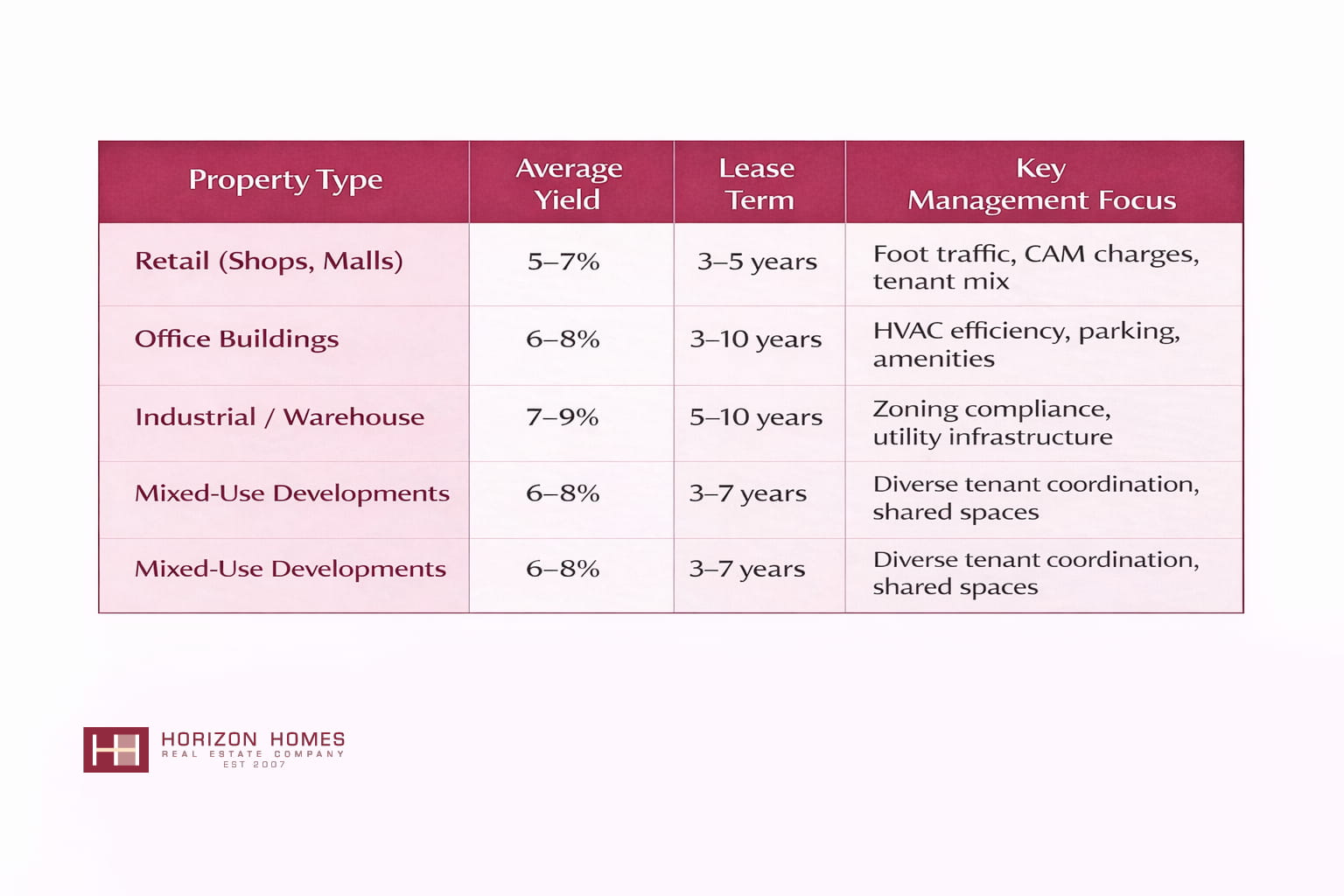
Koh Samui’s rental market generates 5-12% gross yields depending on property type, location, and management quality. The island’s tourism-driven economy creates consistent short-term rental demand, while the expatriate community supports long-term tenancy.
Rental yield comparison by property type and location:
Occupancy rates average 65-75% annually for well-managed properties in prime locations, with peak season (December-March) achieving 85-95% occupancy and low season (May-October) dropping to 45-60% [^6^]. Properties within 10 minutes’ drive of Chaweng or Fisherman’s Village maintain highest occupancy year-round.
Capital appreciation in Koh Samui averages 3-7% annually for quality properties in established areas, with new infrastructure projects driving localized spikes of 15-25% [^7^]. The island’s limited land availability and strict building height restrictions (maximum 12 meters in most zones) support long-term value retention.
Community Amenities and Services
Koh Samui’s amenity distribution concentrates in 4 primary commercial zones: Chaweng (east coast), Lamai (southeast), Bophut/Fisherman’s Village (north), and Nathon (west coast administrative center). Each zone offers distinct service profiles.
Amenity availability by area:
Chaweng: Bangkok Hospital Samui (international standard), 3 international supermarkets (Tesco Lotus, Big C, Macro), 50+ restaurants, nightlife district, shopping centers
Lamai: Samui International Hospital, local markets, family restaurants, beach clubs, convenience stores
Bophut: Boutique dining, wellness centers, yoga studios, artisan shops, international kindergartens
Maenam: Local Thai markets, basic medical clinics, convenience stores, traditional restaurants
Choeng Mon: Upscale dining, private medical clinics, international school access
Nathon: Government offices, ferry terminals, local administrative services
The Samarithan International School in Bophut and Panyadee International School in Lamai serve expatriate families, with annual tuition ranging 250,000-650,000 THB depending on grade level. Proximity to international schools adds 10-20% to property values in surrounding neighborhoods.
Noise Levels and Environmental Factors
Environmental quality varies dramatically across Koh Samui’s microclimates. The island’s mountainous interior creates distinct weather patterns, with east coast areas (Chaweng, Lamai) receiving less rainfall than west coast locations (Nathon, Lipa Noi).
Noise considerations by zone:
- Chaweng central: Nighttime noise levels of 65-75 dB during high season from beach clubs and entertainment venues. Properties within 200 meters of the beach road experience highest disruption.
- Lamai: Moderate noise from beach bars, concentrated in central 2-kilometer strip. Residential areas 500+ meters inland maintain quiet environments.
- Bophut: Quieter evening atmosphere with restaurant noise primarily 6-10 PM. Fisherman’s Village maintains strict noise ordinances after 11 PM.
- Maenam, Bang Por, Taling Ngam: Minimal noise pollution, primarily from local traffic and occasional beachfront restaurants.
Air quality in Koh Samui remains good year-round except during burning season (February-April) when regional agricultural burning affects visibility and air quality indices. Coastal areas experience consistent sea breezes that disperse pollutants.
Future Development Plans
Koh Samui’s development trajectory focuses on sustainable tourism and infrastructure modernization. The Samui City Development Plan 2024-2030 outlines specific zoning restrictions and infrastructure investments affecting neighborhood selection.
Key development projects impacting property values:
- Airport expansion: Increasing capacity from 6 to 10 million annual passengers by 2027, improving accessibility but potentially increasing tourist density [^8^]
- Ring road improvements: Widening sections between Chaweng and Lamai to reduce congestion
- Wastewater treatment: New facilities in Chaweng and Lamai to improve coastal water quality
- Medical tourism hub: Bangkok Hospital Samui expansion targeting international patients
- Digital nomad infrastructure: Co-working spaces and long-stay accommodation in Bophut and Maenam
Areas near approved development projects appreciate 15-25% faster than comparable locations without planned improvements. The Thai government’s Eastern Economic Corridor (EEC) extension to include Koh Samui signals long-term infrastructure commitment.
Which Koh Samui Neighborhood Is Right for You?
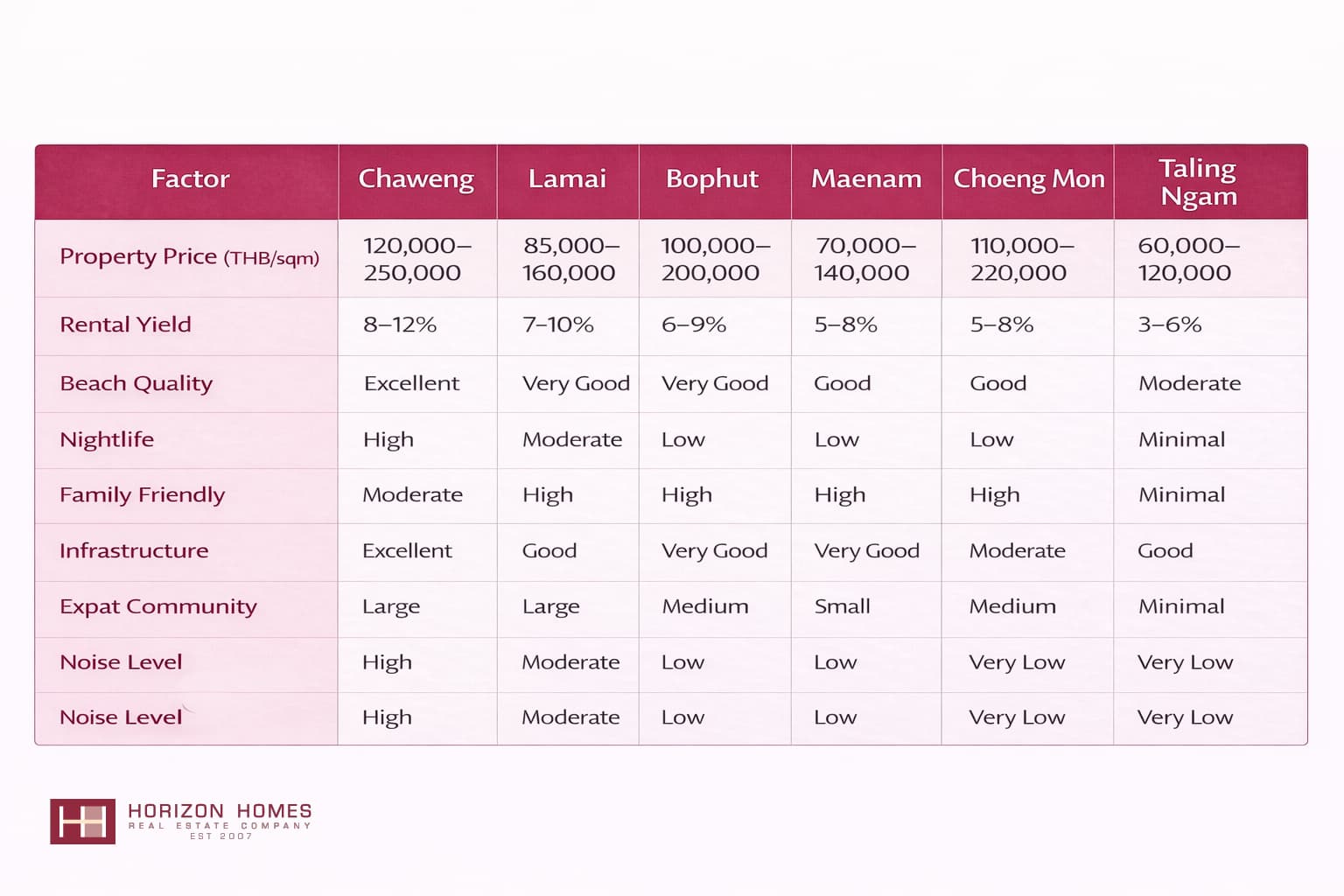
The optimal Koh Samui neighborhood depends on buyer profile and primary objectives. Six distinct buyer personas match to specific areas based on lifestyle priorities, budget constraints, and investment timelines.
Comparison: 6 Major Koh Samui Neighborhoods
Chaweng: The Entertainment and Investment Hub
Chaweng delivers highest rental yields and strongest appreciation for investors prioritizing cash flow over personal use. The 7-kilometer beach and concentrated tourism infrastructure generate consistent rental demand year-round.
Buyer profile match: Investors seeking maximum rental yield, young professionals wanting nightlife access, short-term rental operators
Trade-offs: Higher noise levels, denser development, premium pricing, traffic congestion during peak season
Lamai: The Balanced Family Option
Lamai combines family-friendly atmosphere with investment potential, offering 20-30% lower prices than Chaweng while maintaining strong rental demand. The area attracts long-stay families and retirees seeking quieter environments than Chaweng.
Buyer profile match: Families with children, retirees seeking community, investors wanting balanced yield and appreciation
Trade-offs: Smaller beach, fewer high-end amenities, limited nightlife compared to Chaweng
Bophut: The Upscale Lifestyle Choice
Bophut’s Fisherman’s Village delivers sophisticated dining, boutique shopping, and international school access within a walkable village setting. Properties here appeal to affluent buyers prioritizing lifestyle quality.
Buyer profile match: Affluent professionals, families requiring international schools, lifestyle-focused buyers, digital nomads
Trade-offs: Higher price per square meter than Lamai, smaller beach area, limited late-night entertainment
Maenam: The Value and Authenticity Play
Maenam offers 30-40% lower entry prices than east coast alternatives while maintaining beach access and local Thai community character. The area attracts buyers seeking authentic Thai living with foreign resident amenities.
Buyer profile match: Budget-conscious buyers, long-term residents seeking Thai community integration, value investors
Trade-offs: Limited high-end amenities, smaller expat community, basic infrastructure in some areas
Choeng Mon: The Luxury Enclave
Choeng Mon provides gated community living with 5-star resort adjacency for buyers prioritizing security and exclusivity. The area’s limited development and high-end positioning support value retention.
Buyer profile match: High-net-worth individuals, security-conscious families, luxury vacation home buyers
Trade-offs: Highest price premiums, limited walkable amenities, dependency on vehicle transport
Taling Ngam: The Secluded Retreat
Taling Ngam delivers privacy and dramatic sunset views on Koh Samui’s undeveloped southwest coast. The area suits buyers prioritizing seclusion and natural environment over convenience.
Buyer profile match: Privacy-focused buyers, nature enthusiasts, long-term retirement planning
Trade-offs: 45-60 minute drive to main amenities, limited rental demand, basic infrastructure