

Most people who buy on Koh Samui do not live here. They find a villa or a condominium on a two-week trip, go home, and then face a transfer appointment at the Land Office that expects them to be standing in the room. Flying back for a single morning of paperwork is expensive and, often, simply impractical. A power of attorney is the instrument that solves this: it lets someone you nominate sign and register on your behalf. It is also the document in a Thai purchase that most rewards care, because it is short, it is written in a language most buyers cannot read, and a careless version of it hands away more than the buyer intended.
Can You Buy Property in Thailand Without Being There?
Yes. A properly executed power of attorney allows an appointed person to complete the transfer at the Land Office in your absence, including signing the transfer documents and paying the fees. What it does not do is remove the need for the document itself to be in the Land Office’s prescribed form and correctly witnessed, and a defect there will stop the appointment on the day.
What a Power of Attorney Actually Does in a Thai Property Purchase
A power of attorney is an authority, not an agreement. It does not change what you are buying or on what terms — that sits in the sale-and-purchase contract. What it changes is who may act. Thai law treats the appointed person’s acts within the scope of the authority as your own acts, which is precisely why the scope needs writing narrowly rather than generously.
In a typical Koh Samui purchase the authority is used for a short list of things: attending the Land Office, signing the transfer application and the deed documents, paying transfer fees and taxes, and collecting the updated title deed. Buyers sometimes extend it to related errands — registering a lease, signing utility transfers, filing documents with a condominium juristic person — but each of those should be named, not assumed.
The Land Office Will Not Accept Just Any Document
This is the point at which overseas buyers are most often caught out. A power of attorney drafted the way it would be drafted at home, however carefully, is not what the Land Office is looking for. The Land Department works from its own prescribed forms — commonly referred to as the Tor Dor 21 for land, and the Or Chor 21 for condominium units — and the officer handling the transfer is checking the form, not the intention behind it.
Why the Prescribed Form Matters
The form is in Thai. It is filled in by hand, it identifies the specific property by title deed number, and it states the specific act authorised. There is no equivalent of a broad home-jurisdiction power that quietly covers everything; the officer is reading a particular box to see whether it names the particular transaction in front of them. A document that describes the authority in general terms, or that names the property loosely, can be refused even though nothing about it is dishonest.
Blank Spaces Are the Classic Failure
Never sign a power of attorney with empty fields, and never accept the explanation that the blanks will be completed later for convenience. A signed form with gaps is an authority whose scope has not yet been decided, and it will be decided by whoever holds the paper. Every unused space should be struck through before signing, the property should already be identified, and the act authorised should already be written in. This single habit removes most of the risk the instrument carries.
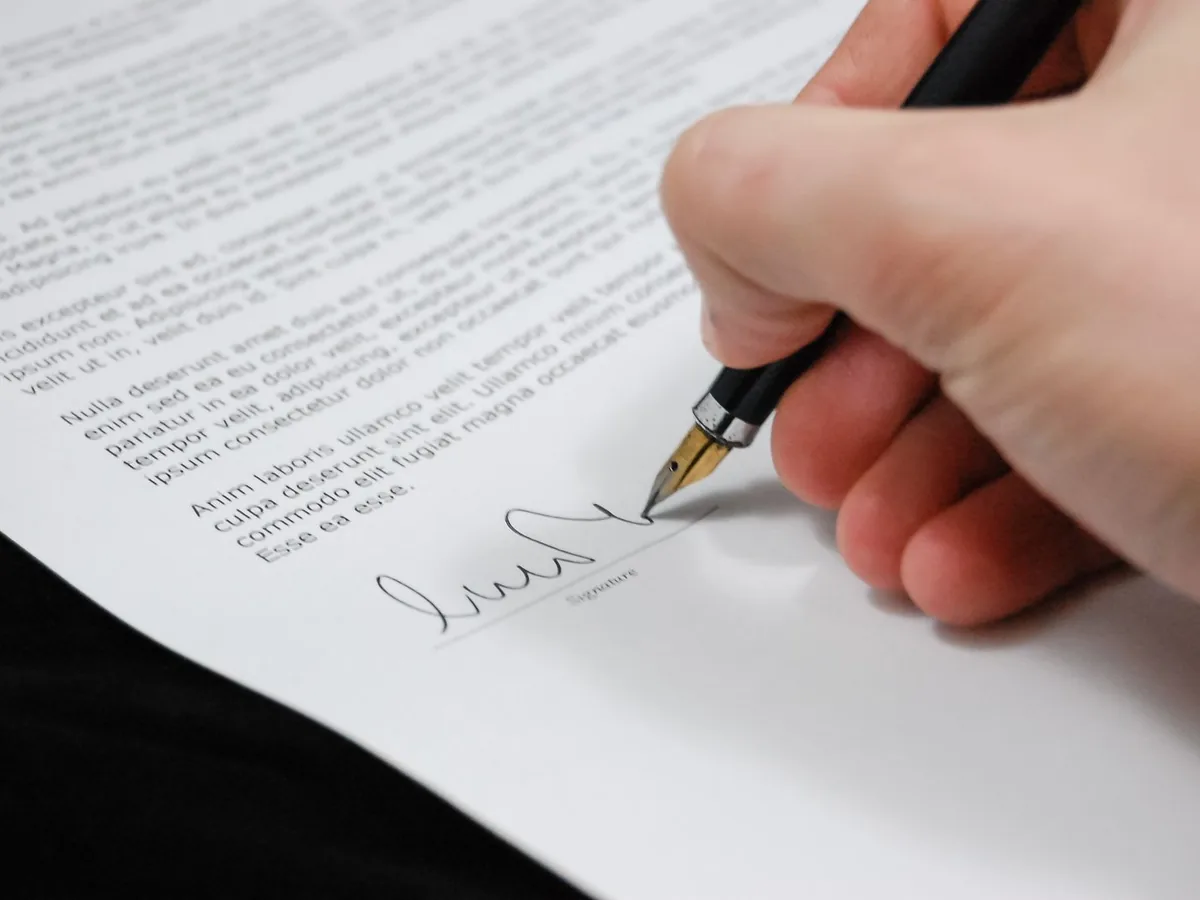
How Do You Sign a Power of Attorney From Outside Thailand?
Signing abroad adds a verification step, because the Land Office has no way of knowing that the signature is yours. The usual route is to have the document signed in front of a notary public in your own country, and then legalised — certified by the Thai embassy or consulate covering that country, and in some cases by your own foreign ministry first. An alternative, where it is practical, is to attend the Thai embassy or consulate and sign there directly, which collapses the two steps into one.
Alongside the form itself you will normally need a copy of your passport, signed by you on every page, and sometimes evidence of your current address. Allow real time for this. Legalisation is measured in days or weeks rather than hours, and a transfer date agreed without accounting for it is a date that will move.
Who Should You Appoint?
The appointee should be someone whose interests do not move when the transaction moves. In practice this usually means the lawyer acting for you, under written instructions, rather than anyone on the selling side. An appointment given to the seller’s representative, or to a person whose fee depends on the sale completing, places the authority to sign in the hands of someone who benefits from it being used.
That is not an accusation against anyone in particular; it is a structural point. The whole value of the instrument lies in the appointee being accountable to you alone. If the only person conveniently available is on the other side of the transaction, the better answer is to delay the appointment rather than to accept the conflict.

General or Specific: Which Should You Use?
Use a specific one. A specific power of attorney names the property, names the act, and expires when that act is done. A general power of attorney authorises a class of dealings and keeps authorising them until it is revoked, which means it continues to exist long after the reason for creating it has gone.
There are narrow situations where something broader is genuinely useful — a long absence during which several filings will fall due, for instance. Even then, the sensible shape is several specific authorities issued as each step arrives, rather than one wide one issued at the start. If a broader authority is unavoidable, give it an expiry date on its face.
What a Power of Attorney Cannot Do for You
It cannot make you eligible for something you were not eligible for. A foreign buyer who cannot hold land in their own name does not become able to do so by appointing a Thai attorney, and an authority used to construct that outcome is a problem with the structure, not a solution to it.

It also cannot substitute for the checks that happen before signing. The appointee attends the Land Office to execute a decision you have already made, on a title that should already have been investigated. If the due diligence has not been done, the power of attorney simply means the defective purchase completes without you in the room.
Finally, banks apply their own rules. Opening a Thai bank account, and in some cases remitting and documenting the purchase funds, may require your personal attendance regardless of what authority your attorney holds for the property side.
How Do You Revoke a Power of Attorney?
In writing, and promptly. Revocation should be notified to the appointee directly, and where the authority has been lodged or relied on — the Land Office, a condominium juristic person, a utility provider — those parties should be told as well. An authority that has served its purpose and been left in existence is an open door, and the fact that nobody has walked through it is not a reason to leave it open.
The cleanest version of this problem is the one that never arises: an authority drafted for a single transfer, which has no remaining scope once the transfer is registered.
Before You Sign: The Short Checklist
Read the document, or have it read to you by someone acting for you alone, and confirm each of the following before your signature goes on it. The property is identified by its title deed number. The act authorised is named and limited. Every blank space is struck through. The appointee is named, and is not the seller or the seller’s representative. The date and any expiry are written in. A signed passport copy is attached. If you are signing abroad, the notarisation and legalisation route has been confirmed with the lawyer who will present the document, before you book the appointment.
Conclusion
A power of attorney is the ordinary way an overseas buyer completes a Koh Samui purchase without flying back for the transfer, and there is nothing exotic or risky about using one. The risk lies entirely in how it is drafted and who holds it: a specific authority, on the Land Office’s own form, with no blanks, in the hands of someone acting for you alone, does exactly one job and then stops existing. A broad authority signed in haste, with gaps left to be filled in later, does something quite different. The difference costs nothing at the time, and it is only visible afterwards.
Frequently Asked Questions
Does a power of attorney for a Thai property purchase have to be in Thai?
Yes, in practice. The Land Office works from its own Thai-language forms, and the version it accepts is the Thai one. A translation can be prepared for your own understanding, but it is the Thai document that is signed and submitted, so have someone acting for you confirm that the two say the same thing.
Can my lawyer act as my attorney at the Land Office?
Yes, and this is the usual arrangement. The important qualification is independence: the firm should act for you alone. A lawyer who also acts for the seller is not a neutral appointee, however the engagement is described.
How long does legalisation of a power of attorney signed abroad take?
It varies by country and by consulate, and it is realistically a matter of days to weeks rather than same-day. Confirm the route and the current timescale before agreeing a transfer date, because this is the step that most often pushes completion back.
Can one power of attorney cover several transactions?
It can, but it should not as a default. A single authority covering several dealings stays alive after the first is complete. Separate specific authorities, each naming its own act, keep the scope matched to what is actually needed.
What happens if I want to cancel the authority before the transfer?
Revoke it in writing and tell the appointee immediately, along with any office or counterparty that has been given a copy. Acts already properly carried out within the authority stand; what revocation stops is anything further.