
Renting a property in Koh Samui can feel exciting, especially if you are moving to the island for remote work, retirement, a long holiday, or a fresh start in Thailand. However, before a landlord or property manager approves your rental application, you may be asked to go through a tenant screening process.
This process is not meant to make renting difficult. It helps landlords confirm that tenants can pay rent on time, follow the lease terms, respect the property, and legally stay in Thailand for the rental period. For tenants, understanding the screening process can make the rental journey smoother, faster, and less stressful.
Koh Samui has a unique rental market. Some tenants stay for a few nights in a villa, while others rent for several months or even years. The island attracts digital nomads, retirees, expats, Thai professionals, families, and corporate travellers. Because of this, landlords often use different levels of screening depending on the rental type, lease length, and property value.
If you are still planning your move, it can help to read our renters guide for Koh Samui properties before starting your search. This guide explains what tenants should expect when renting property in Koh Samui, what documents may be required, and how to prepare before applying for a rental home.
Why Tenant Screening Matters in Koh Samui?
Tenant screening is common in many rental markets, but it is especially important in Koh Samui because the island has a highly international tenant base. Landlords may deal with applicants from different countries, visa types, income sources, and rental backgrounds.
For tenants, this means landlords may ask for more information than expected, especially for long-term rentals or higher-value villas.
Screening helps landlords check:
- Who will be staying at the property
- Whether the tenant can afford the rent
- Whether the tenant has a valid visa or legal stay status
- Whether the tenant has a reliable rental or employment history
- Whether the property is suitable for the tenant’s needs
It also protects tenants by making the rental process more professional. A landlord who uses proper screening is more likely to provide a clear lease agreement, proper payment records, written house rules, and a structured move-in process.
What Should You Know About Koh Samui’s Rental Market?
Koh Samui’s rental market is different from a standard city rental market. The island has a mix of short-term holiday rentals, monthly villa stays, long-term expat housing, and luxury properties.
Tenants who want a clearer view of pricing, demand, and property trends can also explore Horizon Homes’ guide to the Koh Samui property market before choosing a rental.

Short-Term Holiday Rentals
Short-term rentals are usually booked through platforms such as Airbnb, Booking.com, or Agoda. Screening for these stays is usually lighter, especially for stays of a few nights.
However, tenants may still need to provide:
- Platform-verified ID
- Guest details
- Payment confirmation
- Purpose of stay
- Agreement to house rules
For longer holiday stays of one month or more, landlords may apply a more detailed screening process.
Monthly and Medium-Term Rentals
Monthly rentals are popular with digital nomads, remote workers, and people testing life in Koh Samui before committing to a longer stay. These rentals often require more screening than short-term bookings.
Landlords may ask for:
- Passport copy
- Visa details
- Proof of income
- Deposit payment
- Rental agreement
- Confirmation of number of occupants
Before applying, tenants can compare available Koh Samui properties for rent to understand the type of home, location, and budget that suits their stay.
Long-Term Rentals
Long-term rentals are usually six months to one year or more. These are common among retirees, expats, business owners, and families relocating to Koh Samui.
Because the landlord is committing the property for a longer period, screening is usually more detailed. Tenants may need to provide identification, income proof, references, visa documents, and a signed lease agreement.
Luxury Villa Rentals
Luxury villas often involve higher deposits, stricter house rules, and more detailed checks. This is because the property value, maintenance cost, and damage risk are higher.
Tenants considering this option can browse villas for rent in Koh Samui to compare property styles, locations, and rental expectations before submitting an enquiry.
What Are the Common Types of Tenants in Koh Samui?
Different tenants may be screened in different ways depending on their reason for staying in Koh Samui.
Digital Nomads and Remote Workers
Digital nomads often rent for one to three months, although some stay longer. Since income may come from freelance work, online businesses, or overseas employment, landlords may ask for proof that the tenant has stable income.
What Digital Nomads May Need
- Passport copy
- Visa or entry stamp
- Proof of remote work
- Bank statements
- Client contracts or freelance invoices
- Payment platform records from PayPal, Wise, Stripe, Upwork, or similar platforms
Long-Term Expats and Retirees
Retirees and expats often rent villas or condos for six months to one year. Landlords usually see this group as stable, especially when tenants have valid retirement visas or long-stay arrangements.
What Expats and Retirees May Need
- Passport copy
- Retirement visa or long-stay visa
- Proof of pension, income, or savings
- Local contact details
- Previous landlord reference, if available
Short-Term Vacation Guests
Short-term guests may not need full financial screening, especially when booking through a trusted platform. However, property managers may still ask for basic details to protect the property and confirm the booking.
What Vacation Guests May Need
- Verified booking profile
- Copy of ID or passport
- Number of guests
- Purpose of stay
- Agreement to house rules
- Security deposit, depending on the property
Corporate and Business Travellers
Corporate tenants may stay for business trips, company retreats, or work assignments. These bookings often require company verification and formal invoicing.
What Corporate Tenants May Need
- Company details
- Letter from HR or employer
- Contact person for the booking
- Billing information
- Purchase order or invoice details, if required
How Does the Tenant Screening Process Work in Koh Samui?
The screening process may vary depending on the landlord, property manager, and rental type. However, most tenants can expect the following steps.
Step 1: Initial Rental Inquiry
The process usually begins when you contact the landlord or property manager about a property.
At this stage, they may ask basic questions to understand whether the property fits your needs.
Information You May Be Asked For
- Your intended move-in date
- Length of stay
- Number of occupants
- Nationality
- Reason for staying in Koh Samui
- Whether you have pets
- Whether you smoke
- Preferred payment method
- Any special requests
How to Make a Good First Impression
Respond clearly and honestly. Landlords are more likely to trust tenants who communicate professionally from the start.
A good inquiry should include:
- Who you are
- How long you want to rent
- Who will stay with you
- Your reason for staying
- Your preferred move-in date
- Any important requirements, such as pets, workspace, or parking
Step 2: Identity Verification
Identity verification is one of the most common parts of tenant screening. Landlords need to know who is renting the property and who will be staying there.

For Foreign Tenants
Foreign tenants may be asked to provide:
- Passport information page
- Current visa or entry stamp
- Immigration arrival record, if available
- Contact details
- Emergency contact
Your passport should usually be valid for at least six months beyond your intended stay.
For Thai Tenants
Thai tenants may be asked to provide:
- Thai national ID card
- House registration, if available
- Contact details
- Employment details, if needed
Step 3: Visa and Legal Stay Check
For longer rentals, landlords may check whether your visa allows you to remain in Thailand for the full rental period. This is especially common for leases of three months or more.
Common Visa Types for Tenants
- Tourist visa
- Visa exemption entry
- Non-Immigrant B visa
- Retirement visa
- Education visa
- Long-Term Resident visa
- Other long-stay visa types
Why This Matters
If your visa expires before your lease ends, the landlord may worry about overstay risks, early termination, or legal complications. For this reason, tenants should be ready to show that they can legally stay in Thailand for the rental period.
If your visa will need renewal during the lease, explain your plan clearly.
Step 4: Financial Verification
For monthly and long-term rentals, landlords may ask for proof that you can afford the rent. This is common for villas, luxury homes, and leases longer than one month.

Common Financial Documents
You may be asked to provide:
- Bank statements
- Employment letter
- Payslips
- Proof of business ownership
- Pension statement
- Investment income record
- Freelance income records
- Client contracts
- Platform earnings reports
Income Guideline
A common guideline is that rent should not take up too much of your monthly income. Some landlords may expect tenants to earn around 2.5 to 3 times the monthly rent, although this varies by property and landlord.
For example, if the monthly rent is 50,000 THB, the landlord may want to see that you have enough stable income or savings to comfortably cover the rent, deposit, utilities, and living costs.
Step 5: Reference Checks
Some landlords or property managers may ask for references, especially for long-term rentals.
Possible References
- Previous landlord
- Current employer
- Business partner
- Personal reference
- Local contact in Thailand
What Landlords May Ask References
They may ask whether you:
- Paid rent on time
- Took care of the property
- Followed house rules
- Had disputes with the landlord
- Caused noise or damage issues
- Would be accepted as a tenant again
If you do not have previous rental references in Thailand, you can provide international references instead.
Step 6: Background Checks
Background checks are less common for short stays but may be used for luxury rentals, long-term leases, corporate bookings, or high-value properties.

What May Be Checked
- Criminal record, where legally available
- Previous eviction history, depending on country
- Public records, where available
- Employer details
- Identity document validity
Landlords should only conduct background checks with proper consent. If you are asked for a check, make sure you understand what information will be reviewed and how your data will be used.
Step 7: Property Fit and House Rules
Screening is not only about money and documents. Landlords also want to know whether you are a good fit for the property.
Common House Rule Topics
- Smoking
- Pets
- Noise
- Parties
- Guests
- Subletting
- Pool use
- Parking
- Maintenance responsibilities
- Utility payments
For example, a villa in a quiet residential area may not be suitable for parties or large groups. A condo may have strict rules about pets, parking, and shared facilities.
Tenants should ask about these rules before signing the lease. Location also plays a big role in property fit, so it may help to read about choosing the right area in Koh Samui before committing to a rental.
Step 8: Deposit and Payment Confirmation
Once the landlord is comfortable with your application, you may be asked to pay a deposit.
Common Deposit Requirements
In Koh Samui, deposits commonly range from one to two months’ rent, depending on the lease length, property type, and landlord’s policy.
You may also need to pay:
- First month’s rent
- Utility deposit
- Cleaning fee
- Booking deposit
- Security deposit
Payment Tips for Tenants
Use payment methods that leave a clear record, such as bank transfer. Always request a receipt or written confirmation.
Avoid paying large amounts in cash without documentation.
Step 9: Lease Agreement Review
Before moving in, tenants should review the lease agreement carefully. A proper lease protects both the tenant and landlord.
What the Lease Should Include
- Full names of tenant and landlord
- Passport or ID details
- Property address
- Lease start and end date
- Rent amount
- Payment schedule
- Security deposit amount
- Utility payment responsibilities
- Maintenance responsibilities
- House rules
- Termination terms
- Deposit return conditions
- Signatures from both parties
What Tenants Should Check Before Signing
Make sure you understand:
- When rent is due
- What happens if payment is late
- Who pays for electricity, water, internet, pool care, and garden care
- Whether pets are allowed
- Whether smoking is allowed
- Whether guests are allowed
- How maintenance requests are handled
- How much notice is needed to end the lease
- When and how the deposit will be returned
What Thailand-Specific Things Should Tenants Know Before Renting?
Renting in Koh Samui may be different from renting in your home country. These are some local points tenants should understand.
Security Deposits
Security deposits are usually one to two months’ rent. The deposit is normally returned at the end of the lease after deductions for damage, unpaid rent, utilities, or cleaning fees.
To protect yourself:
- Take photos and videos during move-in
- Record existing damage
- Ask for a written inventory list
- Keep payment receipts
- Confirm deposit return terms in writing
Utilities
Some rentals include utilities, while others charge separately. Electricity can be a major cost in villas, especially if air conditioning is used heavily.
Ask before signing:
- Is electricity included?
- What is the electricity rate per unit?
- Is water included?
- Is the internet included?
- Who pays for pool and garden maintenance?
- How are utility bills calculated?
Pets and Smoking
Rules on pets and smoking vary widely. Some landlords allow pets with an extra deposit, while others do not allow them at all.
Always be upfront about pets or smoking before signing. Hiding this information can lead to disputes or deposit deductions.
Maintenance Responsibilities
In villas, tenants may be responsible for basic care, while landlords usually handle major repairs.
Clarify who is responsible for:
- Air conditioning servicing
- Pool maintenance
- Garden care
- Pest control
- Appliance repairs
- Plumbing issues
- Electrical repairs
- Internet issues
90-Day Reporting
Foreigners staying in Thailand for more than 90 days may need to complete immigration reporting. Tenants on long-term stays should understand their own reporting responsibilities and inform the landlord or property manager if address documents are required.
What Documents Should Tenants Prepare Before Applying for a Rental?
Preparing your documents early can help you secure a rental faster, especially during peak season.
| Document | Usually Needed For |
| Passport copy | Foreign tenants |
| Visa or entry stamp | Medium and long-term stays |
| Thai ID card | Thai tenants |
| Proof of income | Monthly and long-term rentals |
| Bank statements | Higher-value rentals |
| Employer letter | Long-term rentals and corporate tenants |
| Previous landlord reference | Long-term rentals |
| Pet details | Pet-friendly rental applications |
| Emergency contact | Most rental applications |
What Red Flags Should Tenants Watch For When Renting in Koh Samui?
Tenant screening should protect both sides. While landlords screen tenants, tenants should also check whether the landlord or property manager is legitimate.
Landlord Red Flags
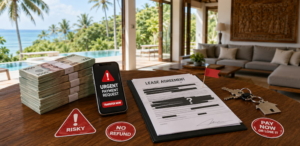
Be careful if a landlord:
- Refuses to provide a written agreement
- Demands cash only
- Will not provide receipts
- Avoids showing proof of property management authority
- Pressures you to pay before viewing or verifying the property
- Gives unclear deposit return terms
- Avoids answering questions about utilities or maintenance
- Uses vague or inconsistent rental terms
How Tenants Can Protect Themselves
Before paying, tenants should:
- View the property or request a live video tour
- Confirm the landlord or agent’s identity
- Ask for a written lease
- Keep all payment records
- Take move-in photos and videos
- Confirm what is included in the rent
- Clarify deposit return terms
- Avoid undocumented cash payments
Conclusion
Tenant screening in Koh Samui is a normal part of renting property, especially for monthly stays, long-term leases, and luxury villa rentals. Landlords and property managers use screening to confirm identity, income, visa status, rental suitability, and agreement to house rules.
For tenants, the best way to make the process easier is to prepare documents early, communicate clearly, be honest about your rental needs, and review the lease carefully before signing. A professional screening process should not feel like an obstacle. It should help create a clearer and safer rental arrangement for both tenant and landlord.
Whether you are a digital nomad, retiree, expat, business traveller, or short-term guest, understanding the screening process can help you rent property in Koh Samui with more confidence. As the Samui real estate market continues to attract international renters, knowing what landlords expect can help tenants move through the process more smoothly and avoid unnecessary delays.
For support finding and renting property in Koh Samui, contact us, Horizon Homes. Our team can help tenants understand rental requirements, compare property options, and move through the rental process with clearer expectations.
Frequently Asked Questions
What documents do I need to rent property in Koh Samui?
Foreign tenants usually need a passport copy, visa or entry stamp, contact details, and proof of income for longer rentals. Thai tenants may need a Thai national ID card and employment or income details.
Do landlords in Koh Samui check income?
Yes, some landlords check income, especially for monthly rentals, long-term leases, and luxury villas. They may ask for bank statements, employment letters, payslips, freelance income records, or proof of savings.
Can foreigners rent property in Koh Samui?
Yes, foreigners can legally rent property in Koh Samui. The restrictions in Thailand mainly apply to property ownership, not renting. However, foreign tenants should make sure their visa or stay status matches the rental period.
How much is the usual rental deposit in Koh Samui?
A common deposit is one to two months’ rent, depending on the property and lease length. Some short-term rentals may require a smaller security deposit or platform-based deposit protection.
Do I need a visa to rent long-term in Koh Samui?
You can rent property as a foreigner, but for long-term rentals, landlords may want to see that you can legally stay in Thailand for the lease period. If your visa needs renewal, explain your plan clearly.
Can I rent in Koh Samui as a digital nomad?
Yes, many digital nomads rent in Koh Samui. You may be asked for proof of remote income, passport details, visa information, and a deposit, especially for stays of one month or more.
Will I need references to rent property?
References may be requested for long-term rentals. If you do not have Thai rental references, international landlord references, employer references, or personal references may be accepted.
Should I pay rent or deposit in cash?
Bank transfer is usually safer because it creates a record. If you pay in cash, always request a written receipt with the payment amount, date, property address, and reason for payment.
What should I check before signing a lease?
Check the rent amount, deposit terms, utility costs, maintenance responsibilities, house rules, lease dates, termination terms, and deposit return conditions. Make sure everything important is written in the agreement.
What are warning signs of a bad rental deal?
Warning signs include no written agreement, cash-only payment demands, unclear deposit terms, pressure to pay quickly, refusal to provide receipts, and vague answers about utilities or maintenance.